
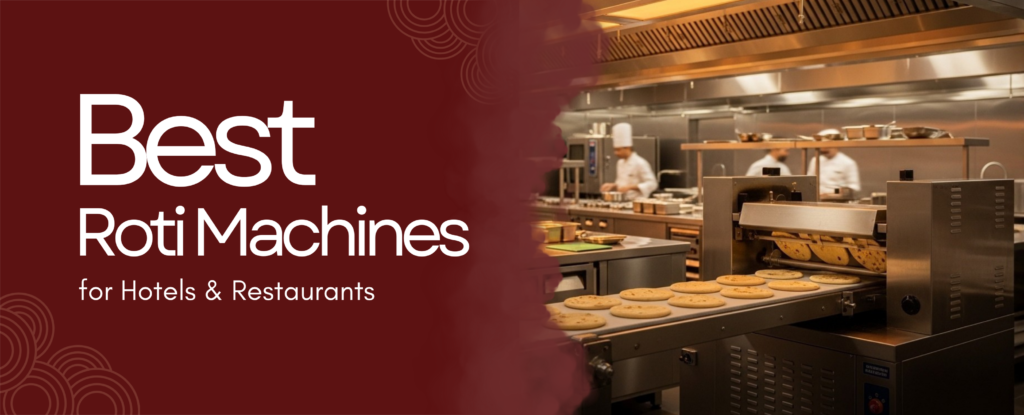
Best Roti Maker Machine for Hotels & Restaurants
Running a hotel or restaurant requires quick service, high-quality food, and efficient kitchen operations. In commercial kitchens that prepare large quantities of chapatis daily, a roti maker is an essential piece of equipment.
Choosing the right automatic roti or chapati-making machine can improve productivity, maintain hygiene, and reduce operational costs. This is especially important for businesses such as:
- Hotels
- Restaurants
- Dhabas
- Cloud kitchens
- Cafeterias
- Canteens
- Catering services
In this guide, we will help you understand how to choose the best roti maker machine, along with buying tips, important features, and FAQs to help you make the right decision.
Why Hotels & Restaurants Need an Automatic Roti Maker Machine
If you are planning to open a restaurant or hotel, one of the first questions that usually arises is:
“How will we make rotis quickly, hygienically, and in large quantities?”
This is where automatic roti or chapati-making machines become extremely valuable. These machines simplify the entire process of pressing and baking chapatis while maintaining consistency.
Sunshine Industries offers advanced commercial roti-making machines designed specifically for hotels and large kitchens.
1. Speed and High Production
Hotels often serve hundreds of customers, especially during peak hours. A commercial chapati maker can produce 800 to 2000 chapatis per hour, depending on the machine model.
This ensures restaurants never run out of fresh rotis during busy service times.
2. Consistent Quality
Machine-made rotis maintain uniform quality, including:
- Even size
- Proper cooking
- Soft texture
- Hygienic preparation
Consistency is especially important for restaurant chains and large hotel kitchens.
3. Saves Time and Labour
Finding skilled staff capable of making hundreds of perfect rotis every day can be difficult.
A roti-maker machine reduces dependence on manual labor while increasing overall production efficiency.
4. Hygienic and Safe
Manual roti making involves frequent handling of dough and food surfaces. Automated machines reduce human contact, ensuring better hygiene and food safety standards.
5. Cost-Effective for Bulk Production
Hotels preparing 500–2000 rotis daily can significantly reduce costs related to:
- Labour
- Gas consumption
- Preparation time
Over time, the machine becomes a valuable long-term investment.
Types of Commercial Roti Maker Machines
Different types of roti-making machines are available depending on the scale of operations.
1. Semi-Automatic Chapati Maker
These machines are best suited for mid-sized restaurants.
Features include:
- Affordable price range
- Production capacity of 300–700 rotis per hour
- Requires limited manual involvement
2. Fully Automatic Chapati Making Machine
These are ideal for large hotels, industrial kitchens, and catering businesses.
The Key features include:
- Automated dough feeding
- Automatic pressing, puffing, and baking
- Production capacity of 1000–2000 rotis per hour
- Minimal human involvement
3. Chapati Pressing Machine
These machines are used mainly for pressing dough balls into flat chapatis.
They:
- Increase production speed
- Work alongside traditional tawa cooking
- Improve consistency in shape and thickness
4. Dough Kneading and Dough Ball Cutting Machines
These machines support the roti-making process by:
- Kneading large quantities of dough
- Cutting uniform dough balls (pedas)
They are commonly used alongside automatic roti-making systems.
Best Roti Maker Machine for Hotels & Restaurants (Recommended)
Sunshine Automatic Chapati Making Machine – Top Pick for 2026
Sunshine Industries is a trusted global manufacturer with 5000+ customers across more than 15 countries.
Why It Is Ideal for Hotels and Restaurants-
- High Efficiency
The machine can produce 800–1000 chapatis per hour, ensuring a continuous supply during busy service hours.
- Consistent Quality
It delivers soft, fluffy, and uniformly cooked rotis every time. - Durable Construction
Built with high-grade stainless steel, the machine is corrosion-resistant and suitable for heavy commercial use.
- Safety and Hygiene
Designed with food-grade materials and safety features to minimize contamination during food preparation.
- Cost Efficiency
Helps reduce labour costs by up to 60–70%, improving operational profitability.
- Reliable Support
Sunshine provides 24/7 service support, ensuring minimal downtime.
- Thermal Management
The machine is designed for continuous operation without overheating, allowing long hours of usage.
- Low Maintenance and Long Life
Engineered for durability with minimal maintenance requirements.
Because of these features, Sunshine machines are widely used in commercial kitchens in India and internationally.
How to Choose the Best Roti Maker Machine for Your Hotel
Selecting the right roti maker machine is essential for smooth kitchen operations. So, Choose the Best Roti Maker Machine for Your Hotel. Sunshine Industries is the best in-
1. Production Capacity
Choose a machine based on daily demand:
- Small restaurants: 300–500 rotis/hour
- Medium hotels: 500–1000 rotis/hour
- Large hotels and canteens: 1500–2000 rotis/hour
2. Machine Type
- Fully automatic machines are ideal for large kitchens.
- Semi-automatic machines are suitable for mid-sized operations.
3. Chapati Size
Ensure the machine supports standard sizes such as:
- 6-inch rotis
- 7-inch rotis
Some machines also allow custom size adjustments.
4. Fuel and Energy Efficiency
Choose machines that use less gas and electricity without affecting output quality.
5. Material Quality
Machines should be made from food-grade stainless steel to ensure durability, hygiene, and corrosion resistance.
6. Ease of Maintenance
Look for machines that:
- Are easy to clean
- Have accessible spare parts
- Require minimal maintenance
7. After-Sales Service
Reliable customer support is essential. Brands like Sunshine provide 24/7 service assistance.
Advantages of Sunshine Roti Maker Machines
Hotels and restaurants benefit from several advantages:
- Produces uniform chapati thickness
- Minimizes dough wastage
- Reduces labour requirements
- Maintains consistent results during peak hours
- Suitable for multi-cuisine and Indian restaurants
Many hotels report 30–40% faster service speed after installation.
H2: Who Should Use a Commercial Roti Maker Machine
These machines are ideal for locations serving chapatis in large quantities, including:
- Hotels
- Restaurants
- Cloud kitchens
- Hostels
- Hospitals
- Industrial canteens
- NGOs
- Catering services
- Gurudwaras
- Community kitchens
Anywhere chapatis are prepared in bulk, a roti maker machine becomes a smart investment.
Frequently Asked Questions (FAQs)
1. Which is the best roti maker machine for hotels?
The Sunshine Automatic Chapati Making Machine is widely recommended because of its durability, high output capacity, and reliable service support.
2. How many chapatis can a commercial machine make per hour?
Commercial machines typically produce 500 to 2000 chapatis per hour, depending on the model.
3. Are machine-made chapatis soft?
Yes. Modern machines are designed to produce soft, evenly cooked, hygienic rotis.
4. How much space is required for installation?
Most machines require 4–6 feet of space, depending on the machine size.
5. What is the price of a commercial roti maker machine?
Prices vary based on capacity and automation level.
Typical range: ₹1,00,000 to ₹6,00,000.
6. Can the machine operate continuously?
Yes. High-quality machines are designed for continuous operation in commercial kitchens.
7. Is maintenance difficult?
No. Most machines require basic cleaning and periodic servicing.
Conclusion
The best roti maker machine for hotels and restaurants is one that delivers:
✔ High production capacity
✔ Consistent quality
✔ Fast cooking
✔ Better hygiene
✔ Low maintenance
✔ Reduced operational costs
Sunshine’s commercial chapati-making machines meet all these requirements, making them a reliable solution for restaurants, hotels, and large kitchens.
Investing in a high-quality automatic roti maker machine is one of the smartest decisions for businesses looking to increase service speed, reduce labour dependency, and maintain consistent food quality.