
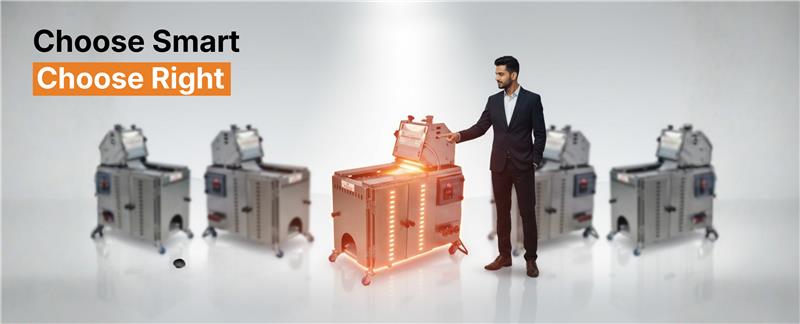
Roti and chapati are not just everyday foods in India; they are also integral to meals served in homes, restaurants, hotels, hostels, canteens, and large kitchens. However, as your businesses grow and the demand for these breads/rotis increases, making them by hand can become a little bit difficult, too labor-intensive, and inconsistent.
This is where roti-making machines come into play. When choosing a roti-making machine for your business, it’s important to consider more than just the price.
Factors such as capacity, reliability, cleanliness, long-term savings, and operational efficiency are crucial. A well-chosen machine can significantly reduce costs, improve food quality, and help your kitchen scale up smoothly. This guide aims to help you navigate the process of selecting the right roti-making machine so that you can make a confident decision for your business.
1. Understand Your Business Requirements First
Understanding your own kitchen needs is the most crucial step before looking at machine models or brands. The “best” machine depends on how and where it will be used, as each food business is unique.
- How many rotis do you require each day or each hour?
- How big, medium, or small is your kitchen?
- Do you operate during peak hours, such as the lunch and dinner rush?
- Do you currently rely a lot on manual labor?
- In the upcoming six to twelve months, do you intend to scale?
For example:
- A small restaurant or hostel may need 300–500 rotis per hour.
- A mid‑size hotel or caterer may require 700–1000 rotis per hour.
- A large canteen, NGO kitchen, or industrial food unit may need 1500–2000+ rotis per hour.
Having clarity on demand prevents over‑buying or under‑investing.
2. Know the Different Types of Roti Making Machines
Roti making machines are broadly classified based on automation and usage. Understanding these categories will help you shortlist the right type.
2.1 Manual & Semi‑Automatic Roti Machines
These machines require more human involvement. Dough preparation and feeding are usually manual, while pressing or partial cooking may be automated.
Best for:
- Small kitchens
- Limited budgets
- Low production needs
Pros:
- Lower cost
- Simple operation
Cons:
- Labour‑dependent
- Lower consistency
- Not ideal for high volume
2.2 Electric Roti Makers (Domestic or Light Commercial)
Electric roti makers are commonly used in homes and small setups. They can make a few rotis at a time using pre‑made dough.
Best for:
- Homes
- Very small cafés or trial kitchens
Pros:
- Compact size
- Easy to use
Cons:
- Very low output
- Not designed for continuous commercial use
- Overheating and wear in busy kitchens
2.3 Fully Automatic Commercial Roti Making Machines
These machines are designed for professional kitchens. They can handle large volumes with minimal human effort and deliver consistent results.
Depending on the model, they may:
- Accept dough balls
- Automatically press, cook, and puff rotis
- Deliver uniform size and thickness
Best for:
- Restaurants
- Hotels
- Catering services
- Hostels and canteens
- NGOs and community kitchens
Pros:
- High output
- Consistent quality
- Reduced labour cost
- Hygienic operation
Cons:
- Higher initial investment
For most growing food businesses, fully automatic commercial machines offer the best long‑term value.
3. Decide the Right Production Capacity
One of the most important things to consider when choosing a roti-making machine is its capacity. If you go for a machine that’s too big, you could end up spending more money than necessary. On the other hand, if the machine can’t keep up with your needs, it might slow down your service.
Generally, here’s what you can expect in terms of capacity:
- For hostels and small eateries: 300–500 rotis per hour
- For hotels, caterers, and mid-sized kitchens: 700–1000 rotis per hour
- For large canteens, NGOs, and industrial kitchens: 1500–2000+ rotis per hour
It’s important to choose a machine that can handle your average usage and also meet demand during peak times.
4. Consider Automation Level & Labour Savings
Businesses buy roti machines mainly to rely less on workers.
Here are some key questions to think about:
- How many workers currently make rotis?
- Can one person use the machine?
- Will using the machine help with training and keeping staff?
A fully automated machine can often take the place of two to three kitchen workers, which leads to:
- Lower monthly salaries
- Less need for skilled workers
- More consistent results
5. Evaluate Build Quality & Materials
A roti-making machine is a long‑term asset that builds quality directly, which affects durability, hygiene, and maintenance costs.
What to Look For:
- Food‑grade stainless steel body
- Strong heating elements or burners
- Smooth surfaces for easy cleaning
- Durable conveyor or pressing systems
Cheap materials may reduce upfront cost but lead to frequent breakdowns and hygiene issues.
6. Space, Power & Utility Requirements
Before purchasing the machine, it’s important to check whether your kitchen can support the machine or not.
Consider:
- Floor space and layout
- Electrical load or gas availability
- Ventilation and heat management
- Ease of installation and movement
The commercial machines are available in electric, gas, or hybrid configurations, so choose the one machine that aligns with your kitchen infrastructure.
7. Hygiene & Food Safety Compliance
We probably see that mostly where food stalls are, the hygiene is zero. So, Food safety is critical, especially for hotels, institutional kitchens, and NGOs.
A good roti-making machine should:
- Minimise manual handling
- Use food‑safe materials
- Be easy to clean and sanitise
- Support consistent cooking
This not only protects customer health but also builds trust and brand reputation.
8. Maintenance, Service & After‑Sales Support
Even the best machines need maintenance. So, before buying, always check these :
- Availability of service centres near you
- Spare parts support for your machine
- Warranty coverage
- Technical assistance response time
Reliable after‑sales support ensures uninterrupted operations and peace of mind.
9. Cost vs Long‑Term Value (ROI)
Many businesses only look at the purchase price. Instead of considering the total cost of ownership. So, better to think about long-term savings:
- Lower labor costs
- Less waste
- Faster service
- Consistent quality
- Improved capability
A well-made machine that costs a little more can often pay for itself in just a few months.
10. Which Roti Making Machine Is Best for Different Businesses?
Restaurants
When it comes to handling busy times in a restaurant, a mid-range fully automatic roti maker that can churn out 700 to 1000 rotis an hour can really do the trick. It helps manage the rush while ensuring that every roti is consistent and delicious.
Hotels
For hotels, having automatic equipment that guarantees uniformity in the rotis is a game-changer. Whether it’s for buffets, room service, or banquets, it keeps things running smoothly and efficiently.
Catering services
Catering services also benefit significantly from high-capacity machines. They can tackle large orders without compromising on quality, which is essential for maintaining client satisfaction.
Canteens and hostels
In canteens and hostels, reliable and user-friendly machines are a must for daily use. They need to be sturdy enough to handle repetitive tasks without hassle.
NGOs & Community Kitchens
Lastly, community kitchens and NGOs can serve a large number of people while keeping costs manageable by using high-output, energy-efficient machinery. It’s all about maximizing impact while being budget-conscious.
Conclusion
If you are going to buy or going to start any business, wherever you need Roti making machines, so, Before choosing roti-making machines for your business, it’s very important to make a smart choice. This decision affects how much you produce, the quality of the rotis, and how well your business does overall. Take time to figure out what you need and look at things like how many rotis it can make, how easy it is to use, how well it’s built, and the benefits it provides over time.
Remember, a good roti-making machine isn’t just an extra cost for you, but it’s a tool that helps your business to run better and grow rapidly. Choosing the right one can really help you succeed.
Frequently Asked Questions (FAQs)
1. Which roti-making machine is best for a restaurant business?
A fully automatic commercial roti-making machine with a capacity of 700–1000 rotis per hour is ideal for restaurants, as it balances speed, consistency, and cost.
2. Is an electric roti maker suitable for commercial use?
Electric roti makers are suitable only for homes or very small setups. For continuous, high‑volume commercial use, fully automatic commercial machines are recommended.
3. How much does a commercial roti-making machine cost in India?
Prices typically range from ₹80,000 for small units to ₹6,00,000+ for high‑capacity industrial machines, depending on features and output.
4. How many staff are required to operate a commercial roti machine?
Most fully automatic machines can be operated by a single trained person, significantly reducing labour requirements.
5. How long does it take to recover the cost of a roti-making machine?
Depending on usage and labour savings, many businesses recover the investment within a few months through reduced manpower costs and increased efficiency.